How it works
A record that belongs to the person.
A health platform built around one idea: the record belongs to the person, and everyone else is a guest they invited.
01
One record that follows you
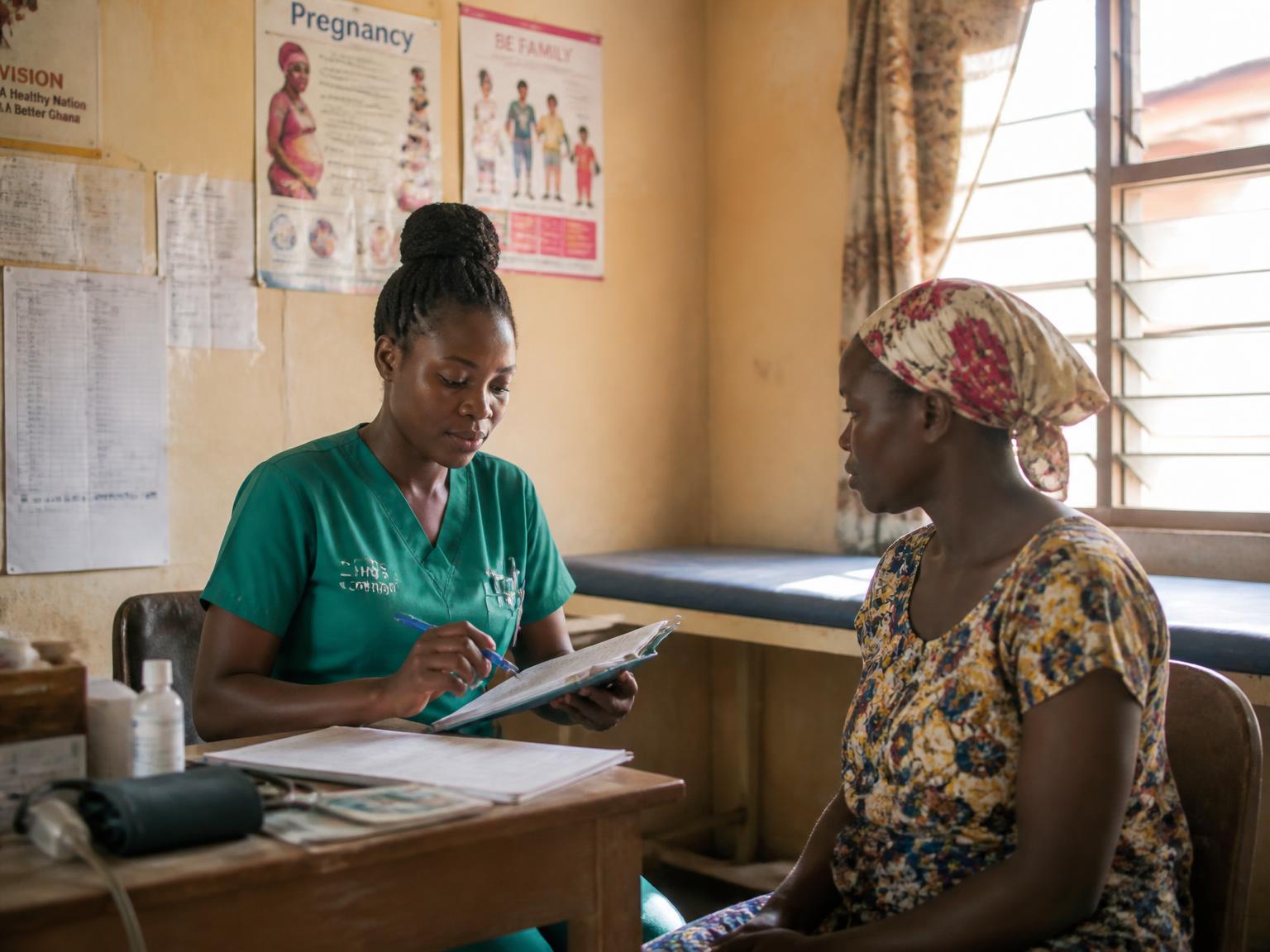
Your Health Identity stays with you for life. When you move from a CHPS compound to a district hospital to a teaching hospital, the history moves with you instead of starting again from an empty page.
02
Access happens with your permission
No one opens your record because of their job title. They ask, they state a purpose, they choose a level of access, and you approve it with a one-time code that expires in minutes. You can revoke it instantly, and every single lookup appears in your own access log.
03
Levels of access, not all-or-nothing
You can let someone confirm your record exists without showing any health details, share only the readings you pick, share a clinical summary for one visit, or grant full clinical access. Most visits need far less than everything.
04
Attention levels are fixed, not guessed
Green, yellow, orange and red are decided by written, reviewed thresholds stored in the platform. The same reading always produces the same level. No AI model can raise, lower or reinterpret them.
05
The AI explains, it does not diagnose
The coach can explain what a reading means, help you plan meals around Ghanaian food, and prepare questions for your clinician. It will not diagnose you, will not name or change medicines, and will not invent guidelines. Food estimates from a photo are approximations, and are labelled as such.
06
Emergency access, with accountability
If you cannot give permission and delay would cause harm, a verified clinician can open your record. That access is short, the reason is recorded permanently, and you are notified immediately.
07
It works on a basic phone
A short code and plain text messages give the same core service without a smartphone or data. Community workers can also record work offline and upload it when the network returns.
08
Population data has no people in it
Anonymous statistics only count people who chose to contribute, groups smaller than five are hidden entirely, and nothing shown can be traced back to a person.